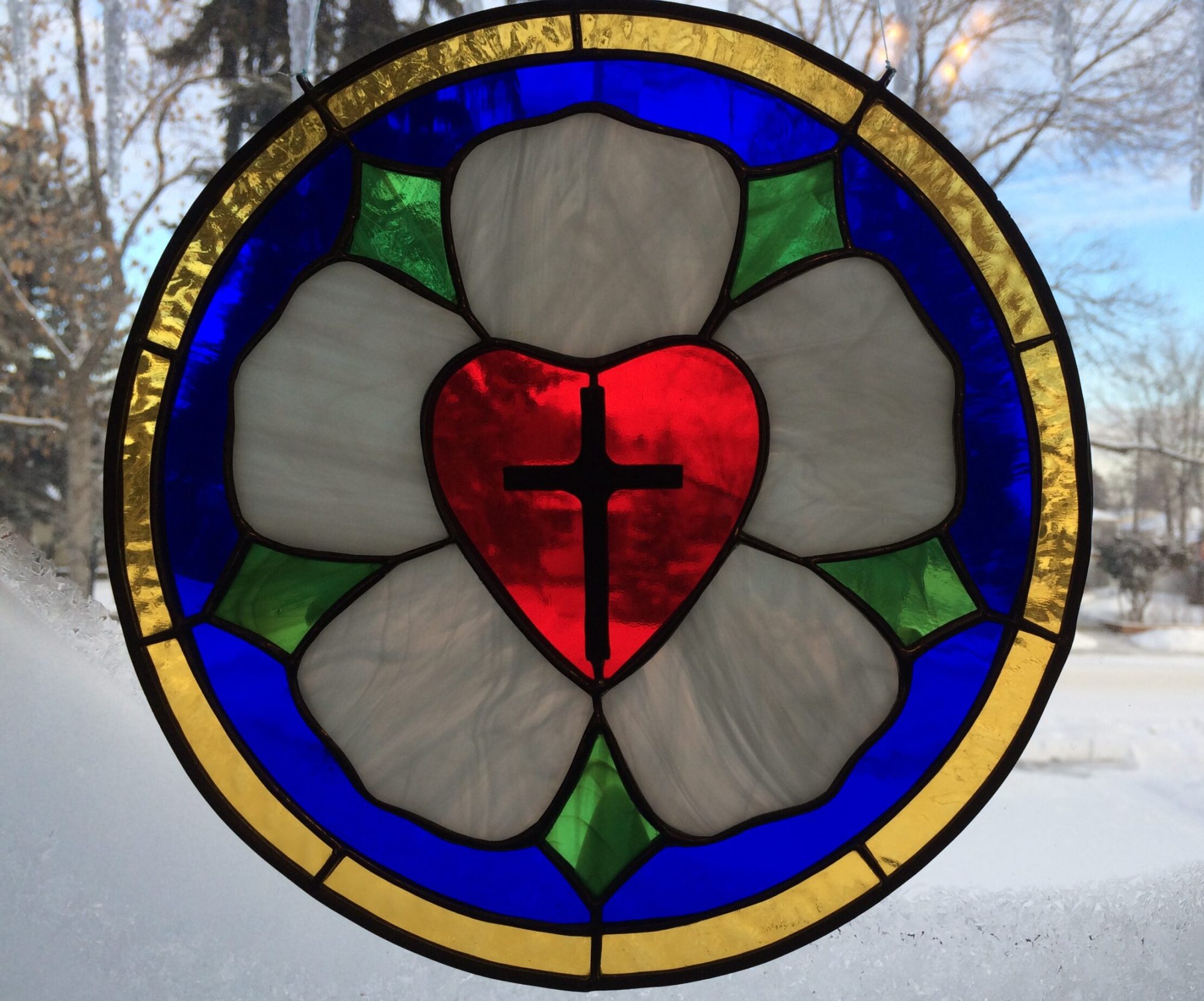

“The Liberator Who Sets You Free” – Reformation Sunday

Click to read the sermon.

I. The Liberator
This morning I want to start with an allegory:


The Liberator strides through the halls of the prison, keys jingling in his hand. His wounds are fresh, but the battle is won. At each cell door he stops, turns the lock and throws open the door. “Come out!” he shouts. “I’ve come to set you free! I haven’t come to plunder or to take what little you have. I’ve come to release you from this prison and give you all sorts of gifts. There’s food and clothing outside-riches in abundance, and I give them to you freely! Your ruler was a tyrant who would keep you in your cells until the day you died. I’ve defeated him. I’ve destroyed him. He’s not coming back. Come out of your cells! Come out of the prison! I’ve set you all free!”


The doors stand open, as do the prison gates outside. The tyrant and his armies are decimated. The Liberator has done all the work to release these people from their prison. “Come forth!” He calls again. “You are free!”


A few heads poke warily out of cells, but there is little other movement. From the cell of Doubtful Suspicion, a voice cries out, “What do you want in return?” “Nothing!” cries the Liberator. “As I have already said, I will say again. I have not come to take from you, but to give you freedom and so much more. Come out! You’re free!”


From the cell of Pedigree comes another voice: “What do you mean, we’re free? We’ve never considered ourselves to be anything but free in the first place. What makes us any freer now?” The Liberator responds, “You’ve been imprisoned so long that bondage is all you have ever known. You’ve been told that it is freedom, but it is not. You are in a cell, but I’ve flung the door wide open. Come out! You’re free!”


Across the hallway, an intelligent voice speaks from the cell of Reasonable Rejection: “Thank you for your offer, but we have elected to remain. You see, we’ve thought about this long and hard, and we’ve decided that you don’t exist. Therefore, your freedom isn’t real. After consultation, we’ve decided to remain in the cell. We know that we’re going to die here and have no hope beyond that, but we’ll make the most of the time that we have here in prison.” The Liberator cries out, “Whether you believe it or not, the battle is fought, I am here and the door is open. Don’t rely on your logical conclusions! Come out! Be free!”


Next comes a surprisingly joyous voice from the cell of Syncretism: “O thank you for your offer, but there is no need! You see, we’ve made our own liberator. We’ve fashioned him out of straw and clay and our own ideas and desires, and he’s been our liberator for quite some time now. Of course, we don’t want to exclude you, either; so from now on we’ll consider our liberator to be just like you. O happy day!” To this the Liberator declares, “But your liberator is not like me. He is only as free as those who have made him, and he is only inside the cell and cannot get out. Don’t put your trust in straw and clay and your own wisdom, for all of that has kept you in your cage. I am no dead brick; I have conquered your tyrant. Come out! Be free!”


There’s some murmuring further down the hallway, and a voice emerges. From the cell of Veiled Blindness, it says, “Our ruler warned us about you! He said that if you showed up here, you’d make us give up all that we have to make us follow you. He warned you that you’d be worse. We’re not coming out!” “And what would I have you give up?” demands the Liberator. “I desire that you give up the rags that you wear in exchange for new clothes. I desire that you give up hunger and starvation in exchange for nourishing food. I desire that you give up darkness, disease, death and decay; in exchange, I give you light and life forever! Consider the source of the warning: The one who warned you was the ruler who kept you in chains, and he’s a liar from start to finish. I’ve come to save you! Come out! You are free!”


From the darkness behind another open door, another voice: “We are so happy that you have come, and we see the door wide open! We look forward to joining you in the freedom that lies outside. In fact, as we have been for the past centuries, we are busy chipping away at this wall with our spoons. We haven’t made a dent yet; but it’s only a matter of time until we make our escape by our own hand.” The voice from the cell of Futile Effort fades away, replaced by the scraping of silverware on granite. The Liberator shouts, “Put down the spoons and cease your efforts! The door is open because I’ve done all the work! Come out! Come forth now! You are free!”


The Liberator remains, calling for all to hear. He continues to warn them of the death they face in that prison. He warns them that their efforts will not save them. He warns them of the lies of the ruler who has kept them bound. And all the while, he calls them forth to have life, to be free.


Time and time again, though, voices emerge from the darkness, giving one reason or another why prison is preferred. Why do so many look for excuses not to be free? But here and there, it happens. From one cell or another, a poor wretch emerges. Blinking in the unaccustomed light, he would fall and fail if the Liberator did not hold him up and keep him on the journey. One by one they come, and after a while a crowd of former prisoners stands outside. They are clothed and fed. They are strengthened and enlivened. They have new life within them, because the Liberator has set them free. They need never return to the prison again.


And yet, absurd as it sounds, some of them do. Some of them return to their cells. It may be because they just like the darkness and the life of the cell better. It may be that they just won’t trust the Liberator’s ongoing kindness. It may be that they hear the voices of former comrades calling them back, and they elect to join the old club once again. It’s a strange phenomenon, because many of those who return believe they are still liberated. “I spent some time with the Liberator. I heard him speak. I ate and wore his clothes. Because I met him that day, I am free. Sure, I’m back in the prison with the same old stuff. My clothes have returned to rags and I’m starving again. But I once listened to the voice of the Liberator and I was with him then, so I must still be free.” It’s a terrible delusion, for he’s returned to his prison and slipped chains back on his wrists. And all the while, the cell door still stands open, and the Liberator still calls.


Those outside continue in his care. They remain fed and clothed, healthy and free. They’re free because the Liberator has come, and the Liberator remains. He’s fought, he’s set them free, and he will continue to protect and preserve them. Forever.


II. The Son Who Sets You Free
For, of course, the Liberator of our allegory is none other than the Lord Jesus Christ. He has defeated sin, death and the devil, all of which sought to keep you enslaved and lost forever. The risen Christ still bears the wounds on His body-the nail prints in His hands and the spear-pierce in His side, for these testify that He has won the victory and crushed the head of the enemy.


And now, victorious, the Son of God cries out to the world, “Therefore if the Son makes you free, you shall be free indeed.” There is no better news: Once the world was lost forever to the bondage of sin and death. Now, the Son of God offers freedom for all.


Yet, out of the dark prison of sin, the objections still emerge against the Lord and His cross. For one reason or another, people don’t want to be free.


Those in the Gospel lesson objected that they needed no liberation, because they had never been imprisoned in the first place: “We are Abraham’s descendants, and have never been in bondage to anyone. How can you say, ‘You will be made free’?” (Jn. 8:32) To which Jesus responded, “Truly, truly, I say to you, whoever commits sin is a slave of sin” (Jn. 8:34). No matter their heritage and rules, they still sinned and were slaves to sin; and Jesus sought to set them free. So He called out “Come out! Be free!” with the words, “If the Son makes you free, you shall be free indeed.”


At the time of Luther, the leading objection was this: “The Lord Jesus has died for our sins-to help us escape the prison of hell, and that is good. Now, we will break ourselves out of our cell to meet Him by our prayers and works and payments.” It’s the equivalent to digging through the granite wall with a spoon while the cell door is open behind you. Thus the Lord declares in the epistle for today, “Therefore by the deeds of the law no flesh will be justified in His sight, for by the law is the knowledge of sin” (Ro. 3:20). In other words, no works and deeds can save you. But the next verse says this: “But now the righteousness of God apart from the law is revealed.” There is a way to freedom from sin, and Romans 3 goes on to declare that this is found in Jesus. So the Lord still cries out today, “If you try to save yourselves by your own works and prayers and decisions, you will never be free. But if the Son makes you free, you shall be free indeed.”


Other objections arise in our present day, and you’ve heard them all before. Many have decided that the Lord does not exist, and therefore His offer of salvation and freedom is imaginary; but no matter how much man insists that the Lord does not exist, He remains. Many others have created another god; and the growing fad is to say that any god is just another face for Jesus. But the difference is clear: Jesus is the Son of God become flesh to rescue them from their prison of sin; all those other gods are dead things that they have created while doing time. Others shun the freedom and eternal life because they are too much in love with their sin, or too afraid of giving it up-whatever “it” might be: immorality, greed, materialism, self-esteem, whatever. Yet all of these things they cling to only isolate. Immorality only leaves one used and lonelier. Greed insists on having more than others, which loses friends fast. Pride insists on being better than the rest, and so it shuns others, too. First, they isolate; then, they kill. They may feel like freedom, but they are chains that delight to destroy. And the Savior calls out, “If the Son makes you free, you shall be free indeed.”


Why the blindness? Why do so many seek to remain in prison? Why do so many shun the light and the freedom of forgiveness? This tells us something about how lost man is. Sin is not like a pair of socks-something on the outside that we can just cast off; no, sin infects us to the core of our soul. By nature, we are not good people who happen to be attacked by sin. We are sinful by nature. In that sinfulness, we are so blinded that we cannot see the danger we are in. We are so dead that there is no way we can make ourselves free. In that sinfulness, we naturally choose to go against God’s will.


Left to ourselves, by nature we will choose the prison of sin every single time. But the Lord calls out, “If the Son makes you free, you shall be free indeed.” His cry of freedom is His powerful Word, and His Word grants the grace and faith needed to be free. He has conquered sin, death and the devil at the cross. He has flung wide open the gates of prison; and now, by His powerful Word, He calls all to freedom. He once commanded, “Lazarus, come forth,” and a dead man came out of His tomb. He has declared His forgiveness and life to you, and so He has raised you from the dead.


The Lord offers this salvation to all who hear His Word. Not all who hear, however, will be saved: His Word gives them the faith that they need to be saved, but He does not force anyone to leave the prison of sin. If they stay, so be it, for He will compel no one to be free.


It is His Word that delivers the forgiveness, faith and freedom. Added to water, His Word sets free in Holy Baptism; added to bread and wine, His Word strengthens the faith of the believer. Therefore, it is both a great privilege and imperative for the Church to continue to proclaim His Word. The church of the Reformation affirmed this truth by using the four letters you see on the front of today’s bulletin: VDMA. In Latin they stand for Verbum Domini Manet in Aeternum (The Word of the Lord Endures Forever). I encourage you to read the history of this monogram from the insert in today’s bulletin.


This brings us to one more warning, for Reformation is not only about the salvation of the individual; it is about the Reformation of the Church. “The Church is always under reformation,” said Luther; it must always make sure it remains steadfast to that Word which frees sinners from prison by the grace of Christ. Reformation is never more necessary than today.


This is true because so many church leaders and church bodies have capitulated to the objections of the world. “You don’t believe that Jesus is truly the Son of God become flesh who died for your sins? Oh, then, we will agree with you. We will still call ourselves ‘church,’ but we will only talk about life in this world since we don’t believe in eternal life.” Or, “You want to call yourself a Christian but justify your immorality? Then we will agree with you: We will make tolerance the high virtue and vote that perversion is good. And if the majority votes that immorality is okay with God, then it must be so.” Or, “You want to say that other religions worship the same God, or that Jesus is the same god worshiped by all religions? All right, then we will teach the same thing, too.” Or, “You want to make religion all about your works? Then we will tell you that you can fulfill the Law and give you suggestions how, rather than tell you of the Gospel.”


Time and time again, churches and church leaders have elected to yield to these objections. Perversely, this is often done in the name of evangelism: “If we teach such things, then more will come into the church-and thus more will be free from their prison.” But this is not so! When churches submit to the demands of the world, they are not freeing people from the prison of sin.


Instead, they are imprisoning themselves and saying, “We are now with you, and we will tell you that you are free.” But no one has been set free; such “Christians” have only surrendered themselves to the bondage of sin.


Woe to the church and the preacher who declare that sin and freedom go together. This is a terrible sin, for it assures sinners that they are free when they are not. It tells them they are forgiven and need not repent when they remain condemned for their sin. So they mislead the sinner not to heaven but to hell, for the freedom they preach is no freedom at all.


This is why the church’s Reformation is never an innovation away from the Gospel, but always a return to its pure preaching. This is why, by the grace of God, we continue to preach His Law which warns of the consequences of sin. And this is why, by the grace of God, we preach Christ crucified, Christ who lived for you, died for you and rose again. Christ who, by His Word, declares to you today, “I have set you free from sin. And if the Son sets you free, you shall be free indeed.”


We continue to declare this message, because we have been set free by it. On this Reformation Sunday, rejoice in this great freedom, which the Lord grants you by these words: You are forgiven for all of your sins in the name of the Father and of the Son and of the Holy Spirit. Amen.

“Wrestling with God” – The 19th Sunday after Pentecost

Click to read the sermon.

Dear Friends in Christ Jesus,


I think that most of us gathered here recognize that something gained by hard work and earned through a struggle is an accomplishment that is character building and is appreciated more than something that is received without any effort. So for example, children are required to practice their penmanship even though it causes little hands to cramp. Musicians have to practice over and over again – long hours of effort before they can play with proficiency. Coaches often proclaim, “No pain; no gain.” The road to anything worthwhile seems to be the tougher one. We would heartily agree with what the Apostle Paul wrote to the Romans 5:3-4, namely that “suffering produces endurance, and endurance produces character”.


Soon we discover that life itself is a struggle where we are constantly wrestling with one thing or another – with your sinful heart or with your heart disease; with one person or another – with a beloved child or a fearful foe. And then, one night (for it seems that the fiercest contests occur during the darkness), you awaken only to realize that you are wrestling with God! Based on today’s Old Testament reading, we want to consider and ponder three people who were … Wrestling with God.


1. The first person is Jacob


Jacob is on an exodus journey. He is going out from his kin in his uncle Laban’s home in Haran and journeying to the promised land and to his brother Esau. Jacob fears what is ahead because he had, by temptation and trickery, taken the inheritance that belonged to Esau and had received the blessing that rightly should have been spoken to his older brother. Then Jacob receives the news that his brother is coming to meet him. He assembles and organizes his great family and his herds with all proper precaution as his group continues in the direction of Esau.


Night comes and Jacob is restless because of what took place twenty years earlier. Jacob understands that time does not take away guilt. Esau is advancing in his direction. Has Esau been waiting for his day of vengeance? These events weigh on his mind and, no doubt, he runs through the various scenarios and mulls over what he might say to his brother. His conscience rises up and accuses Jacob the Supplanter, Jacob the Tricker, Jacob the Deceiver. Esau is coming and is it even possible that his brother might have forgotten about the inheritance and especially the blessing? No way. The promised land is ahead and Jacob’s sin and his ever-increasing burden of guilt prevents him from entering it.


Jacob desires to be alone and to have the solitude that would give him a few hours of peace during a long night. He crosses the stream called Jabbok and this soul continues to seek the peaceful rest that is so illusive. He is now apart from his family and his earthly possessions. His sin has separated him not only from his brother, not only from his family, not only from the promised land, but, it seems to him, also from God’s gracious presence. It is night and except for the memories of his twenty-year-old sin, his burdensome guilt and his ever-increasing fear, he is alone.


Jacob is alone, but not for long. God arrives on the scene. God has come in the flesh and has come to contend with Jacob. They begin an epic wrestling match and Jacob doesn’t realize who his opponent is. As Jacob the sinner contends with the great and holy God, the Lord God permits Jacob to wrestle with Him throughout the night. Sometime during the match Jacob realizes that he is not contending with mere flesh and blood. Suddenly God reaches out His finger and puts Jacob’s thigh bone out of joint. There is instant pain and it continues. Jacob hops around and, in spite of the hurt and suffering, with strength and determination that can only be from above, he does not release his hold on God until He has God’s intended blessing.


Though we don’t know the particular wrestling moves and counters in this match, they might have gone something like this: “Jacob, You have sinned. Yes, but you don’t desire the death of a sinner. I hold You to that truth. I am the God of justice and you are guilty as charged. Yes, but You are the God of mercy and I know that You will not give me what I deserve. You have promised and I cling to Your Word. You deserve nothing but eternal separation from Me. Yes, but You are a gracious God, providing a substitute for my father Isaac on Mount Moriah. I won’t let go of You until I hear the Word of Your blessing.”


Then the Word of the Lord came to the man whose name, Jacob, meant supplanter, “Your name shall no more be called Jacob, but Israel, for you have striven with God and with men, and have prevailed.”


Then Jacob asked Him, “Tell me, I pray, Your name.” But He said, “Why is it that you ask My name?” And there He blessed him. So Jacob called the name of the place Peniel, saying, “For I have seen God face to face, and yet my life is preserved.” The sun rose upon him as he passed Peniel,
limping because of his thigh.


Could God have won this match at any point? Certainly. No mortal man has an inkling of a chance if God wants to reach out in His Divine, Omni-potent justice. But why? Why did the Lord God engage in this wrestling match? Why did He allow Jacob to prevail? Why did God inflict a painful injury that dogged Jacob for the rest of his life on this earth?


At least four reasons: first, so that Jacob’s sin could be forgiven; second, so that Jacob’s guilt could be taken away; third, so that Jacob’s servile fear could be replaced by godly fear; and fourth, so Jacob could hobble into the Promised Land.


2. The Second Man, Jesus


Jesus is on His exodus journey. He is going from His disciples in the Upper Room to face His opponents who are out to kill him. Jesus is restless and His soul trembles for what lies ahead for Him.


Jesus knows that a great troop is assembling and is advancing in His direction. It is night and Jesus knows that time does not take away the sin and the guilt of the world. The events weigh on his mind and He considers what is ahead for Him in the next twenty-four hours.


The Promised Land is ahead and the sins of the world and the ever-increasing burden of guilt prevents the world from entering Paradise. This weighs heavily on the heart and soul of Jesus, the Incarnate Son of God.


Jesus seeks the solitude that would give Him a few minutes of quiet communion. Like Jacob, He crosses a stream – one called Kidron — as His soul continues to seek the peaceful rest that is so elusive this night in which our Lord was betrayed. He is now in the Garden of Gethsemane and with the disciples slumbering yonder, Jesus is now apart from His family and without any comfort. You see, your sin has separated Jesus not only from His disciples, not only from His family, not only from the Promised Land, but also from God’s gracious presence. It is night and except for the trio of sin, death and the Devil, the Incarnate Son of God is alone.


Jesus is alone, but not for long as He calls upon God His Father and pleads with Him, “O My Father, if it is possible, let this cup pass from Me; nevertheless, not as I will, but as You will” (Matthew 26:39).


The Scriptures record no answer to Jesus’ prayer. The struggle continues as the petition is repeated and the plea is uttered a third time. Throughout that dark, that doleful night and the mid-day darkness that followed on Good Friday, there is pain and suffering — instant pain of body, soul and spirit. He is crucified and the Lord Jesus contends with the Lord God throughout the crucifixion.


Though challenged to come down from the cross and save Himself (which would have been so easy for Him), He remains bearing the burden of your sin and not yours only, but also the sins of the whole world. He allows Himself to be pinned in the Divine wrestling match. He will not release His hold on the cross until He has earned God’s intended blessing for you. Dearly friends, this is Jesus, Who for the joy that was set before Him endured the cross (Hebrews 12:2).


Then He cries out from the cross, Eli, Eli, lama sabachthani? That is, My God, My God, why have You forsaken Me (Matthew 27:46).


Why did the Lord God engage in this wrestling match? What joy was there that caused Jesus to endure when the Lord laid upon Him the iniquity of us all? At least four reasons: first, so that the sins of the world could be forgiven; second, so that everyone’s guilt could be taken away; third, so that subservient fear could be replaced by godly fear; and fourth, so those who believe in Him would be able to hear Him invite them into the Promised Land – “Well done, good and faithful servant; … Enter into the joy of your Master (Matthew 25:23).


3. The Third Person
Now we come to the third person in this sermon. The first was Jacob. The second was Jesus. Who is the third person? It could be Job. Having had his soul wrung with grief and his body fully covered with hideous sores, Job wrestled with Lord God Almighty. It could be the woman in today’s Gospel lesson. She came to the judge demanding justice, over and over again. (Matt. 15:25).


But the third person is neither Job nor this pleading woman. It’s you. You are in an exodus journey going out from this fallen world and to the Paradise that God has promised you. But for now you live in a land where there are temptations and in which you have fallen time and again. Perhaps it is pride that keeps you from acknowledging and repenting of sin committed so long ago and still keeps you awake in the darkness before the coming dawn. Maybe it is servile fear that haunts you in the middle of the night. You are alone as you wrestle with your past, with your accused conscience and with that ever-increasing load of guilt.


You are alone, but not for long. God, Who is present everywhere, arrives on the scene. The Lord God permits you to wrestle with Him throughout the darkness of this world’s night. During your sojourn and time of trial, God may reach out His finger and touch your heart or your home or a loved one. There is instant pain and it continues. You hobble around and, in spite of the hurt and suffering, with strength and determination that can only be from above, you will not release this hold on God until You have God’s intended blessing.


It’s amazing, isn’t it? Wrestling with God … and prevailing. “The wages of sin is death … Yes Lord, but the Gift of God is eternal life in Christ Jesus our Lord. … The soul that sins shall die … Yes my Lord, but Jesus was wounded for our transgressions. … There is none that does good; no, not one … Though He slay me, yet will I trust Him. Dear Lord God, You permit me to wrestle with You and give me the strength to do so. Therefore I will not let go of You until I hear the Word of Your blessing.”


Why does the Lord God engage in such a wrestling match with you? Why does God inflict or permit a variety of painful injuries, horrid diseases, heart-rending tragedies and awful events that might dog your days for the rest of your life on this earth?


Once again, there are at least four reasons: first, so that your sin could be forgiven and in Christ it is; second, so that your guilt could be taken away and in Christ it is; third, so that your servile fear could be replaced by godly fear and in Christ it is; and fourth, so you are enabled to limp your way along and be ushered into the Promised Land and in Christ you are.


He provides you with His Word and Sacraments, not only to bring you into the Israel of God, but to sustain you in His Church. Recall your Baptism daily by drowning the Old Adam and declaring, “I am baptized. And if I am baptized then I belong to Christ.” Know yourself … both the sinner and the saint, and know God’s Word … both the Law that accuses and the Gospel that forgives. Listen as the absolution is announced at the beginning of every service and take it to heart. Receive the Body and Blood of the Incarnate Son of God which given and shed for you for the forgiveness of sin and the strengthening of faith.


Through Word and Sacrament, the Holy Spirit gives you the strength to endure whatever the Lord God may permit to come your way and to remain faithful unto death and be given the crown of Life (Revelation 2:10).


Now consider the Word of God written by the Apostle Paul: “Therefore, since we are justified by faith, we have peace with God through our Lord Jesus Christ. Through Him we have obtained access to this grace in which we stand, and we rejoice in our hope of sharing the glory of God. More than that, we rejoice in our sufferings, knowing that suffering produces endurance, and endurance produces character, and character produces hope, and hope does not disappoint us, because God’s love has been poured into our hearts through the Holy Spirit which has been given to us” (Romans 5:1-5). In the Name of the Father and of the Son and of the Holy Spirit. Amen.

“The Mercy of God” – Thanksgiving Sunday

Click to read the sermon.

The Word of the Lord from Luke 17: “Jesus, Master, have mercy on us.” This is the Word of the Lord.


Dear Friends in Christ Jesus,


They’re out of options. There’s nothing else to do. They’re lepers, and the situation is clear. They’re dying from a terrible, and terribly contagious disease. They can’t go to work, they can’t go home, they can’t hug wives and kids. The law is clear: they’re required to stay away from everyone else, except other lepers. That explains why these ten are banded together, dying together, outside of town. If anyone who doesn’t have leprosy wanders their way, these loneliest of men are required to shout out a warning to stay away.


When Jesus comes along, they shout from a distance. Not “stay away,” but “Jesus, Master, have mercy on us.” They’ve heard. Although they’re ostracized and isolated, they’ve still gotten the news of Jesus. They have no other options. There’s nothing else to do. They have nothing to give in return for help. They are completely at the Lord’s mercy.


But I ask you: is there a better place to be than at the Lord’s mercy?


“Jesus, Master, have mercy on us!” they cry. He hears their prayer and He has mercy upon them. It’s a strange sort of mercy, though: He sends them to somebody else. “Go and show yourselves to the priests,” He tells them. He just talks, that’s all. According to the Law, it’s the job of the priests to examine them and certify them to be healed if they’re cured, and that means getting back to home and friends and family. So the lepers do as Jesus tells them: and as they go, they are cleansed.


One of them comes back. He’s a foreigner, a Samaritan; and while we usually note the ingratitude of the other nine at this point, this one—this foreigner—only highlights the Lord’s mercy even more. The man has nothing to give to Jesus in return for healing. There’s reason to rejoice in this man who returns: the mercy of Jesus isn’t just for some, but for all.


The man returns because he has faith. Jesus says so: “Rise and go your way; your faith has made you well.” That’s what faith does: it keeps running back to Jesus. It runs back to Jesus with thanksgiving, because faith gladly says, “I had nothing to give, but Jesus was merciful to me anyway.” It also runs back to Jesus for more. This is, perhaps, the greatest tragedy of the other nine: Jesus has more to give them, but they run away. They’ve got what they most want—they have their lives, health, families and homes again. But they don’t have what they most need—forgiveness, faith, life and salvation.


This is how the world treats Jesus: it takes what it wants and runs away from what it most needs. Thanksgiving provides an excellent example: the highlight of the holiday is food. Believers and unbelievers both like food and make use of it on a daily basis. Both believers and unbelievers have food for the same reason: the Lord’s mercy. The Lord mercifully provides daily bread. He keeps providing when people neglect to thank Him. He keeps providing daily bread even when people give thanks and credit to a false god for the food He’s provided. He didn’t strike the other nine men with leprosy again because they were thankless, and He doesn’t snatch the food He’s given from those who fail to thank Him for that, either. He delights to be merciful to all.


The sad part about the world is that so many take the food and run, when Jesus has so much more to give. He didn’t die on the cross to fill their bellies, but to cleanse them of sin. Those without faith, however, are happy to take the lesser gift of daily bread and run away without the greater gift of salvation. Jesus is there to give that greater gift. The Son of God is present in the flesh because their flesh is rotting away. In healing them, He shoulders the infirmity of their leprosy—He takes it into Himself, in order to bear it to the cross so that they might have healing. He also bears their sins so that they might have salvation. But nine of the men run away with what they want. That’s what unbelief does.


Faith, on the other hand, keeps running back to Jesus. Faith keeps running back with thanks, and faith keeps running back for more. By faith, this leper knows that it’s not just that he was at the mercy of God. He remains at the mercy of God. And by faith, he knows that there is no better place to be.


You are at the mercy of God, too. It’s just not quite as apparent as it was for these lepers in our text. You’re not standing in the desert outside of some village, isolated and ostracized from everybody else because of a terminal disease. You may have significant troubles—health concerns, employment concerns and the like; but you still have options and courses to pursue. There are still things that you can do; and as long as there are things you can do, you don’t usually dwell too much on God’s mercy. It’s only when people are out of options, when nothing else can be done, that we think of them at being at the mercy of God. That suits sinners just fine, because we’re often afraid of what God’s merciful answer might be.


This presents a skewed picture of the Lord. One problem is that it makes our efforts sound more important than His, and His deliverance sound as dependable as an unproven medical treatment offered by a third-world nation. It’s as if we say, “Well, there’s nothing left for us to do. We might as well give God a chance at fixing this, but don’t get your hopes up.” There’s another problem, even if we don’t see God’s mercy as a risky gamble: when we think that we should turn to God’s mercy only when there’s no other hope left, we treat the Lord as one who is distant and doesn’t want to be bothered very much. We’ll take care of ourselves without God’s help, thank you very much: we’ll only call upon Him and His mercy in dire circumstances.


The truth is that you are always at the mercy of God. Thanks be to God, the truth is also that God is always merciful.


Our country’s Day of National Thanksgiving focuses largely on the “daily bread” sorts of gifts that God provides, the sorts of things that we talk about in the First Article of the Creed: “clothing and shoes, meat and drink, house and home, wife and children, fields, cattle and all my goods.” All of these gifts are God’s mercy to you. You need to be warm, so he sends you clothing and shoes. You need food, so He provides meat and drink. You need shelter and companionship, so He sends you house and home, family and friends. Whatever you need, He provides. Maybe we get tripped up because He doesn’t deal with us directly: instead, He uses other people as His instruments to be merciful to us, and He uses you as His instruments to be merciful to others.


This is entirely consistent with our Gospel lesson: Jesus spoke His Word of mercy, and then He used the priests in their appointed calling to get these men back to their homes. He speaks His mercy and uses people to deliver His mercy to those around them. If you’re sick, healing is possible because He speaks healing; but He also sends you to the doctor because that’s the job He’s given to the doctor. If you’re hungry, there’s food because He speaks His promise of daily bread; but He also sends you to the farmer, the rancher and the grocer, because that’s the job He’s given them.


Everything you have is an act of God’s mercy. You are God’s mercy to each other, and that should define how you live. Even the troubles you face are the ones permitted by your heavenly Father in His mercy so that you might see your sins and inabilities, confess them and thus trust all the more in Him.


As you daily confess your sins and put yourself at God’s mercy, then you begin to see how merciful He is in all that He provides. If you deny His mercy until the situation is most dire, you will see your Savior as a distant, last-chance gamble who is worthy of little trust at all. In that case, your faith is near death, because faith doesn’t keep the Savior at a distance. Faith runs back to the Savior with thanksgiving constantly; and while it’s running back to the Savior, it keeps asking for more.


See, by faith you know that the Lord is gracious and merciful, even on the days when His mercy is hard to see. You know because His mercy is not confined to daily bread things that come and go. No, His mercy is built upon Christ and Him crucified for your sins. Because you are forgiven, God has no wrath left for you. And if God has no wrath for you, then all He has left for you is mercy and grace. Because you’re sure that He has only mercy and grace for you, you run to Him with thanksgiving—not once a year in November, but constantly. You run to Him with thanks, and you run to Him for more. You confess your sins daily—not because you have to rub your face in the dirt before God will help you, but because you’re certain that God is there with more forgiveness. You rub His ears with your requests in prayer, not because you have to nag Him to get His attention, but because you know that—for Jesus’ sake—He hears your prayers and delights to answer you in His mercy. He wants to give more. He doesn’t promise what you want—that’s the sort of deal the nine lepers were after. He does promise what you need, so that you might be preserved to life everlasting.


Our liturgy today demonstrates this. I did a quick word-count of our page 15 order of service. The word “forgiveness” or “remission” shows up about four times, “grace” or “gracious” twice. “Peace” appears about six times. “Mercy” shows up about as many times as all of those put together. This service is about mercy: this is the people of God gathered together, run back to the Savior one more time to say, “We give thanks, for you are the merciful Giver of all good things, most of all forgiveness and salvation. Though we don’t deserve it, be merciful to us!” And as faith gives thanks and asks for more, you are sure that the Lord delights to give more. You’re sure because of the cross: for the sake of Jesus, God will be nothing but merciful to His repentant people.


Our final mention of mercy tonight will come right after the Lord’s Supper: “O give thanks unto the Lord, for He is good, and His mercy endureth forever.” You’ll find this verse scattered throughout the psalms: it was often proclaimed at the temple, because the temple was where God was near to His people with mercy. The Lord is just as near—nearer!—to you tonight, present and merciful in His Word and His Supper. Forgiven by these means of grace, you can be certain that He will always be merciful to you.


O, give thanks unto the Lord, for He is good; and His mercy endureth forever. And because His mercy endures forever, you can be forever confident that you are forgiven for all of your sins. In the name of the Father and of the Son and of the Holy Spirit. Amen.

“Under the Influence” – The 17th Sunday after Pentecost

Click to read the sermon.

One of the popular songs I listened to while growing up was a song titled “Under the Influence,” sung by a British gospel singer, Cliff Richard. The idea presented in this song is that we do not live in a vacuum, and no one is truly free; we all live under the influence of the things and people around us. The refrain sings:


Cause we’re under the influence, under the influence
You can try to deny it and call it a lie
But we’re under the influence, under the influence
Under the influence of somebody all of the time


The influence around us can positively or negatively affect and shape us. It is important that we recognize negative influences around us and not fall victim to them. At the same time, allow positive influence to shape us and mould us. Since influence is contagious, we must remain people of godly influence to those around us.


Today’s Old Testament reading talks about the Prophet Habakkuk, who was troubled and disturbed by the wicked and immoral society around him. King Josiah led a major spiritual and religious reformation during his reign, drawing people to Yahweh. However, things went badly when the wicked king Jehoiakim, appointed by the Egyptians, ruled Israel.


Habakkuk observed that his society was overwhelmed by destruction, violence, legal failure, and moral decline. The wicked distort justice and prosper. They silence the righteous, and respect for the law has vanished. Everywhere, there is despair, anguish, and confusion. He lived in a toxic society that exuded an atmosphere of despair, where evil seems to dominate and God remains silent. This prompted Habakkuk to cry out, O LORD, how long shall I cry for help, and you will not hear?


Today’s society is no different. Someone has rightly said our children are growing up in a society where falsehood and lies are seen as truth, and sin is celebrated as right. Those who stand for truth are mocked or silenced.


If Habakkuk lived during a time of toxic societal influence, the Psalmist describes another kind of troubling influence. He speaks of deceitful and harmful individuals he encountered in his life who had a profoundly disturbing impact on him. David describes these individuals as two-faced: they speak kindly to you face-to-face but curse you behind your back. They are relentless and aggressive; they want to see you bleed and suffer. They are envious and deceptive—all they want is to see your downfall from your high position. We don’t know who these people were in David’s life, but a close reading suggests they could be someone who knew him well, perhaps a close associate or political rival.


Thus goes the saying, “Sticks and stones may break my bones, but words will never hurt me.” However, this may not always be true. “The deepest wounds come not from enemies at the gate, but from friends at the table. Sometimes, a toxic influence wears a familiar face, and sometimes it comes from within our circles.


In our Gospel lesson, Jesus said, ‘Pay attention to yourself.’ “Temptations to sin are sure to come, but woe to the one through whom they come! It would be better for him if a millstone were hung around his neck and he were cast into the sea than that he should cause one of these little ones to sin.” Jesus’s warning is that in this fallen world, negative influences leading to sin and despair are a reality. However, you should be careful not to be the one spreading that negative influence on others.


If Jesus doesn’t want you to cause hindrance to others, then what kind of influence does he want us to spread? In our epistle lesson, we read about a quiet yet powerful, godly influence of two ordinary people on a young lad. They were Lois and her daughter Eunice, Timothy’s grandmother and mother. Paul tells us that they were people of profound and genuine faith. Faith is contagious. So Timothy caught their faith. They not only provided a godly influence but also taught him scripture. This made Paul say, I am reminded of your sincere faith, a faith that dwelt first in your grandmother Lois and your mother Eunice and now, I am sure, dwells in you as well. So, continue in what you have learned and have firmly believed, knowing from whom[a] you learned it and how from childhood you have been acquainted with the sacred writings, which are able to make you wise for salvation through faith in Christ Jesus.


Eunice and Lois were not apostles or celebrity believers. They were Jewish converts, and Eunice’s husband, who is Timothy’s father, was a Greek who followed paganism. Yet, these simple women loved God and lead quiet and godly lives which nurtured young Timothy to love God and hear His call. Jesus, in today’s gospel lesson, taught his disciples about faith like a mustard seed that can do wonders. A mustard seed, from the outside, looks small, tiny and unimpressive. There is nothing spectacular and glamorous about it. Yet it grows into a large tree (8-15 feet tall), providing shelter for the birds.


Faith, from the outside, appears unimpressive and weak. Yet it is powerful things which help you rise above the tide of toxic influence around you to be a blessing to others.


When people during Habakkuk’s time struggled in the face of a toxic and ungodly society, God reminded them that “the righteous will live by faith.”


Faith in itself is nothing, but as a gift of God, the faith God provided you connects you to God. Faith is a relationship and trust in God. Faith is an open arm and instrument through which you receive God’s strength and blessings in your life.


Faith in God sustained Habakkuk as he lived in a toxic society that ridiculed and celebrated error, and he prophesied, “For still the vision awaits its appointed time; it hastens to the end—it will not lie. If it seems slow, wait for it; it will surely come; it will not delay.” The message is that God will correct injustice and act in His time, and that we can trust Him and put our hope in Him.


When David faced adversaries, faith and trust in God sustained him.


For God alone my soul waits in silence; from him comes my salvation. He alone is my rock and my salvation, my fortress; I shall not be greatly shaken.
We should note that it is not David’s faith or its quality that is in focus. But it is God, because He alone is the rock. He is a God of steadfast love and power, and He will sustain his faithful and provide David salvation.


Paul reminds young Timothy of the same thing. Be strong and courageous, because God saved us and called us to a holy calling, not because of our works but because of his own purpose and grace, which he gave us in Christ Jesus before the ages began, and which now has been manifested through the appearing of our Savior Christ Jesus, who abolished death and brought life and immortality to light through the gospel.


Paul, in our Epistle lesson, reminds him of at least two things. Firstly, when the world fell into sin, and under the influence of the devil, death and wickedness, he sent his son into this world not just as a positive influence but as its saviour, and he abolished death and brought life and immortality. Through Him, we have salvation, forgiveness of sin, and hope. He claimed us as His own, so we can trust in Him, amid this wicked world, without conforming to this world yet standing strong, truthful and with hope.


Secondly, God has not only saved you and given you the gift of life but also a holy calling. Timothy was the first Bishop in Ephesus. He was tasked with being a positive influence on others through his life, teaching and ministry. For that purpose, God has given him the Holy Spirit and His gifts. So, in carrying on the legacy of his mother and his grandmother on a similar yet entirely different and higher level, Paul writes, “For this reason I remind you to fan into flame the gift of God, which is in you through the laying on of my hands.” God has given you unique gifts to fulfill your calling to be a godly influence through your office. And you are not alone in this task; along with His gifts, God has given you His Holy Spirit. And the Spirit, he gave you, is a spirit not of fear but of power and love and self-control.


We do not live in a Vacuum, and we are always under the influence. And some of it is and will be positive and godly, and we embrace those, thank God for it. We thank God for the presence of Lois and Eunice in our lives. But we also live in a fallen world, a society and people tainted by sin and used by the devil. It can be toxic and hinder our faith. How, then, are we to live when faced with toxicity in people and society? Habakkuk reminds us that “righteous will live by faith.” God claimed us through His word and his waters of baptism. He has given us His gift of Faith. Faith connects us with God and his promises. God sustains us, strengthens us, forgives us and comforts us. He can be trusted in our struggles and trials. He feeds us and nourishes us through the Word, prayer, and sacraments, and reminds us that we are not alone.


Today’s lessons also remind us that we do have a call, a holy calling to be a godly influence in our generation. For that, God has given us gifts and talents and His Holy Spirit, who is the spirit of power and love, enabling us to be an influence around us like a mustard seed.


“Even the tiniest mustard seed can grow into a mighty tree. Our faith may seem small, but God uses it—helping us stand firm, shine brightly, and quietly bring comfort and hope to others in our generation.”
May the Peace of God, which surpasses all understanding, keep our hearts and minds in Christ Jesus.